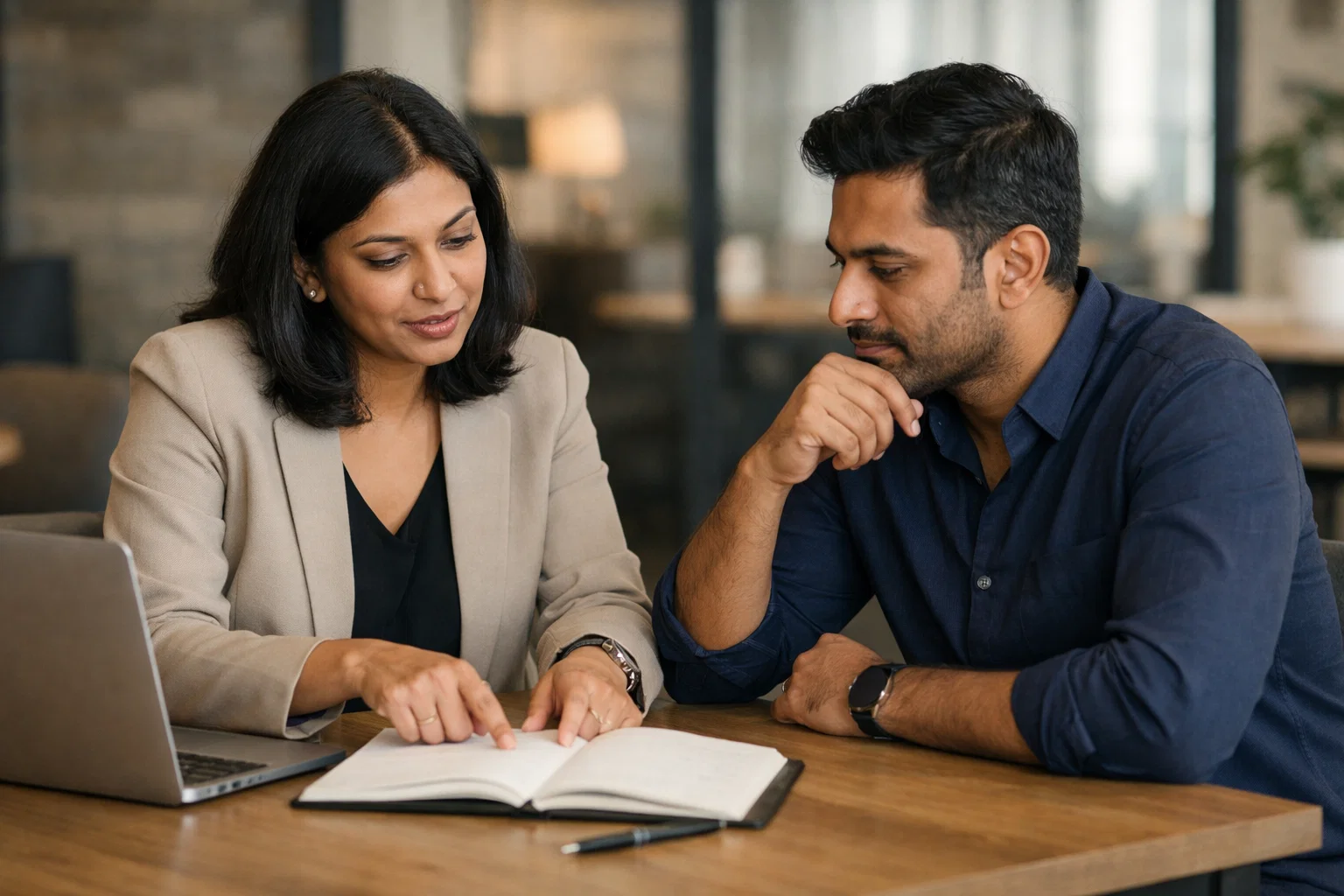
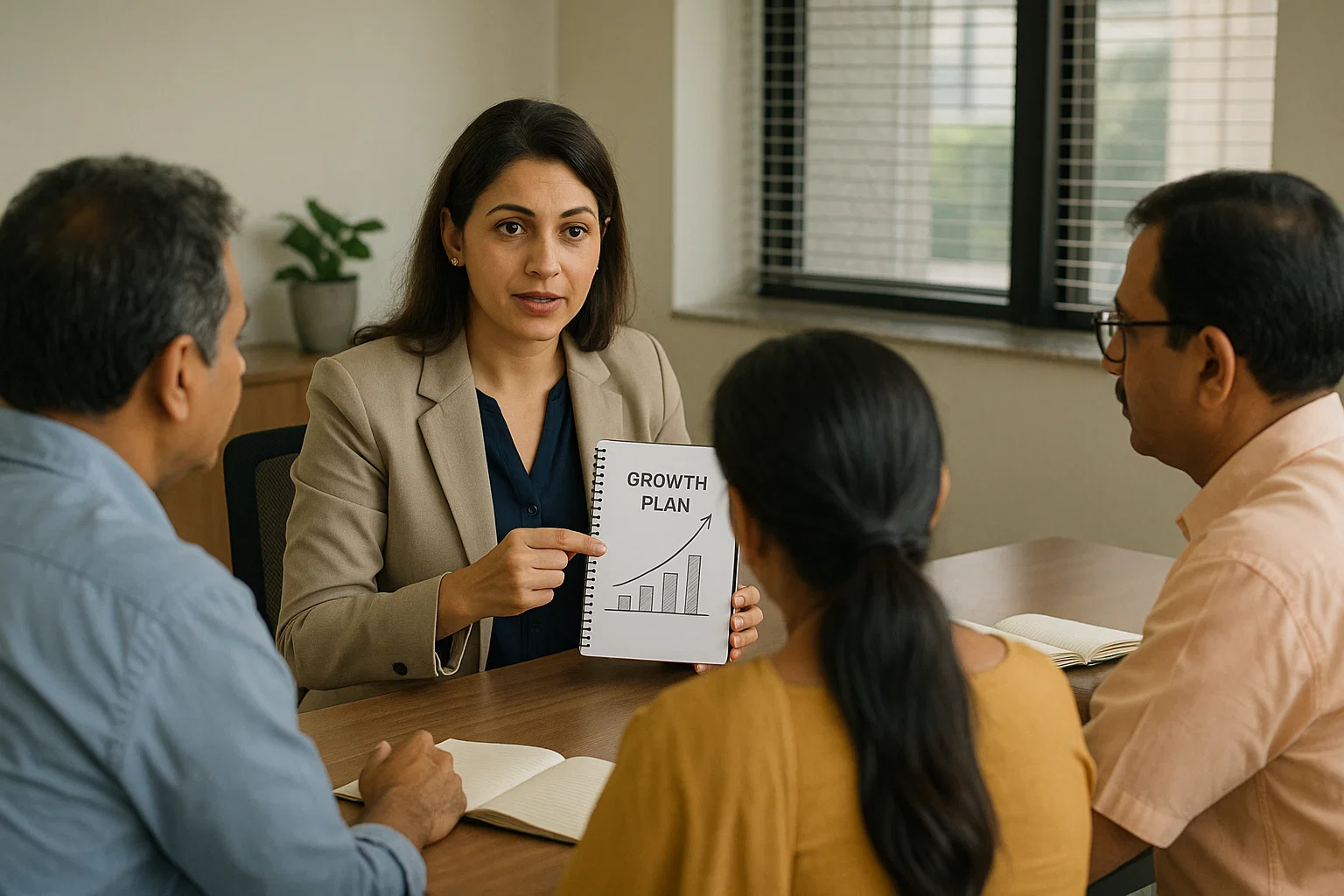
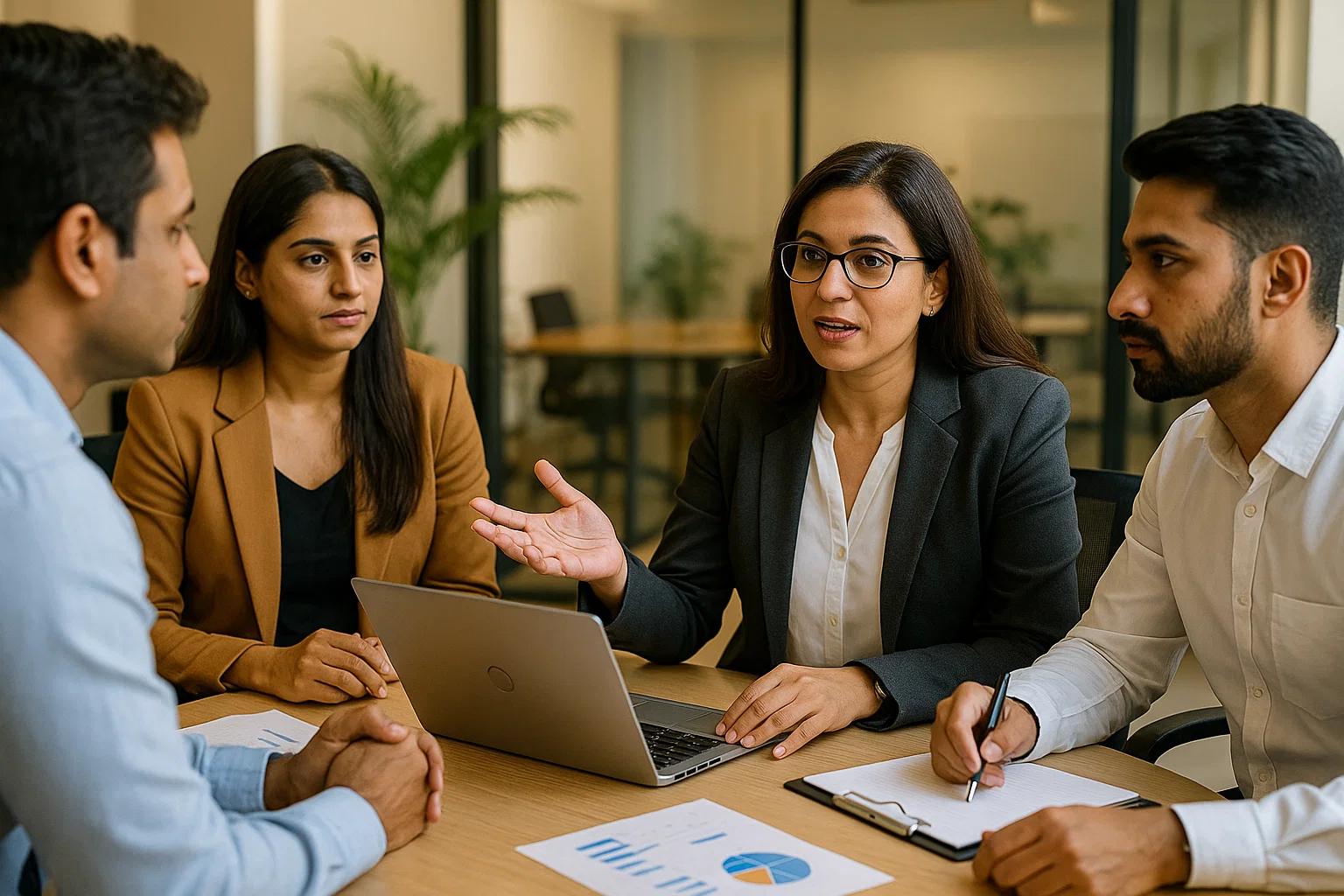
Imagine a second-generation business owner running a respected manufacturing or trading firm in a Tier-2 city. The company is profitable. The family name carries weight. Yet growth feels stuck. Decisions still flow through one person. Processes live in people’s heads, not on paper. Expansion conversations end with, “We’ll figure it out later.” It’s in such scenarios that a Business Coach in India is Empowering SMEs, helping them break free from inherited bottlenecks and move toward structured growth.
This story plays out across India every day.
Small and medium enterprises and family-run businesses form the backbone of the Indian economy. They contribute nearly 30% of GDP and employ over 11 crore people. In the last financial year alone, this segment created 11 million new jobs. Yet despite their scale and importance, many of these businesses struggle to move beyond a certain threshold.
The issue isn’t ambition or effort. It’s structure.
Increasingly, structured guidance is helping SMEs and family enterprises shift from effort-driven growth to system-driven scale—without losing their identity.
The Unique Growth Challenges of SMEs and Family Businesses
Scaling an SME or family business is not the same as scaling a startup. The challenges are layered, personal, and often invisible from the outside.
One of the most common bottlenecks is founder dependency. Decision-making remains centralized, even as the business grows. Family members may wear multiple hats, blurring accountability. Teams wait for approvals instead of taking ownership.
Then there are informal systems. Many successful businesses operate on trust and experience rather than documented processes. While this works at a smaller scale, it creates problems with compliance, quality control, delegation, and investor readiness.
Succession adds another layer. Nearly 70% of family businesses fail beyond the second generation, and only 15–21% have a documented succession plan. Growth stalls not because the business lacks opportunity, but because leadership transitions are unclear. (source : greatlakes.edu.in)
Capital access and regulation further complicate matters. Over 80% of MSMEs cite funding constraints, while changing compliance norms demand more structured operations than ever before.
These aren’t gaps in intelligence. They are structural blind spots.
Why Traditional Growth Tactics Often Fall Short
When growth slows, many business owners respond by working harder. Longer hours. Tighter control. More personal involvement.
This approach may stabilize operations in the short term, but it rarely leads to sustainable scale.
There’s a critical difference between running the business and building the business. The first focuses on daily operations. The second focuses on systems, leadership, and long-term direction. Most founders excel at the former and postpone the latter.
Legacy practices—while valuable—can also limit adaptation. Digital adoption, governance expectations, ESG norms, and professional hiring require new ways of thinking. Internal teams often hesitate to challenge long-standing methods, especially in family-led setups.
This is where the perspective of a business coach in India becomes valuable. Not as an external authority, but as a neutral partner who helps founders see the business objectively—without disrupting its core culture.
The Role of Structured Coaching in Business Evolution
At its core, coaching introduces clarity.
One of the first shifts coaching enables is role separation. Founders move from being the solution to building leaders who can own outcomes. Family roles and professional responsibilities become clearer.
Next comes process and accountability. Documented workflows, simple KPIs, and review rhythms reduce chaos. Decisions are no longer dependent on one person’s availability.
Goal alignment is another major outcome. Coaching helps align family expectations, leadership priorities, and team execution. This alignment alone drives measurable gains. Studies show that SMEs using structured coaching report up to 53% productivity improvement, largely through better time management and clearer priorities.
Perhaps most importantly, coaching moves the business away from constant firefighting and toward intentional planning.
Why Coaching Works Especially Well in the Indian SME Context
India’s SME ecosystem has its own realities. Cost sensitivity is one of them. Nearly 90% of MSMEs prioritize cost control due to tight margins. Any guidance that ignores this reality fails quickly.
Family involvement is another. Decisions often balance business logic with emotional and relational considerations. Regulatory complexity, labor laws, and regional market differences add further layers.
A business coach in India operates within this context. Coaching here is rarely theoretical. It is iterative, practical, and grounded in constraints that founders face daily.
The results are tangible. Many businesses see 25–35% margin improvements, supplier cost optimization, and operational stability within 8–12 weeks of structured intervention. Globally, coaching ROI ranges from 10x to 49x, and Indian family businesses report similar gains when coaching is context-aware.
Family Businesses: Balancing Legacy with Leadership
For family enterprises, growth isn’t just financial. It’s emotional.
There is pride in legacy, fear of losing control, and anxiety around generational change. Coaching helps navigate this transition thoughtfully.
Instead of abrupt authority shifts, coaching supports leadership grooming. The next generation learns strategy, governance, and decision-making—without being forced into predefined roles.
Governance models also evolve. Decision rights, escalation paths, and ownership structures become clearer. This shift from authority-based leadership to system-based governance reduces conflict and builds confidence across generations.
Importantly, coaching does not erase culture. It protects it. Values remain intact, while execution becomes professional.
Case Snapshots: SMEs Scaling Smarter with Coaching
Consider a mid-sized manufacturing firm struggling with founder overload. Every approval ran through one desk. With coaching, leadership layers were introduced. Within months, dependency reduced, decision speed improved, and profitability stabilized.
In another case, a family-run trading business faced expansion challenges due to unclear roles and regulatory confusion across states. Coaching helped clarify responsibilities, standardize compliance processes, and unlock regional growth.
A services firm experiencing erratic growth used coaching to stabilize operations before scaling. Systems were strengthened first. Expansion followed with fewer setbacks.
Across such examples, one pattern stands out: businesses didn’t grow faster by pushing harder—they grew smarter by building structure.
From Owner-Driven to System-Driven Businesses
True scale is not about size alone. It’s about predictability.
When outcomes depend on systems rather than individuals, businesses become resilient. Coaching accelerates this shift by helping founders step into strategic roles—focusing on vision, leadership, and long-term planning.
Globally, companies using coaching report 67% improvement in leadership effectiveness. Indian SMEs mirror this trend as founders transition from operators to decision architects.
This phased, resilient growth model is where a business coach in India delivers lasting value—especially in environments where uncertainty is the norm.
What This Means for SMEs and Family Businesses Today
Markets are evolving faster than legacy systems. Customer expectations, compliance standards, and talent dynamics are changing rapidly.
SMEs already employ over 120 million people in India. The next phase of growth depends on professionalization, not just perseverance.
The takeaway is simple:
- Experience alone is no longer enough
- Informal systems limit scale
- Structured guidance is becoming a necessity, not a luxury
Businesses that invest in clarity today are better positioned for stability tomorrow.
Conclusion
India’s SME and family business sector is entering a new era—one where growth is driven by systems, leadership maturity, and intentional decision-making.
Coaching plays a quiet but decisive role in this shift. It allows businesses to grow without losing control, modernize without abandoning values, and scale without burning out founders.
Working with a business coach in India is less about change for its own sake and more about building businesses that are prepared for the future—on their own terms.
Entrepreneurs seeking structured, context-aware growth may explore working with professionals such as Nandini Bhargava, a well-regarded business coach in India, for tailored guidance aligned with evolving business realities.
👉 Click here to contact Nandini Bhargava