Introduction
Across industries today, more women are stepping into entrepreneurship—not just to start businesses, but to build brands, lead teams, and shape markets in meaningful ways. With the growing presence of a Women Entrepreneurs with a Business Coach in India, this movement is gaining structured support, helping founders channel ambition into sustainable ventures.
This shift is no longer limited to a few urban pockets or niche industries. Women-led ventures are emerging across sectors—from retail and services to tech and manufacturing—driven by independence, ambition, and access to digital platforms that have lowered traditional entry barriers.
The scale of this change is significant. As of early 2026, over 3 crore women-led enterprises are registered, and the number continues to grow steadily. More importantly, women are not just participating in business—they are building companies that contribute to employment, innovation, and economic momentum.
However, while opportunities have expanded, the journey itself remains complex. Many founders find themselves navigating uncertainty, scaling challenges, and decision fatigue. This is where structured guidance begins to play a critical role, offering clarity, confidence, and direction to women entrepreneurs as they grow their businesses.
The Changing Landscape of Women Entrepreneurship
From Participation to Leadership
The narrative around women in business has changed significantly over the last decade.
Earlier, women were often seen as contributors within businesses. Today, they are leading ventures, raising capital, and building companies that compete at national and global levels.
Recent data highlights this transformation:
- Women-led startups have seen consistent growth over the past few years
- Nearly 17% of unicorn startups have women founders or co-founders (source : timesofindia.indiatimes.com
- Women-led tech ventures raised over $1 billion in funding in 2025 alone
- Around 87% of women entrepreneurs project strong business growth in 2026
This is not just growth in numbers—it is a shift in influence.
From self-help groups to high-growth startups, women entrepreneurs are now actively shaping the entrepreneurial ecosystem. They are creating jobs, building communities, and contributing significantly to economic development.
However, growth also brings complexity.
Unique Challenges Women Entrepreneurs Navigate
Growth Comes with a Different Set of Pressures
While the rise of women entrepreneurship is encouraging, the journey often comes with a unique set of challenges that require careful navigation.
One of the most common realities is balancing multiple expectations. Many founders manage both professional responsibilities and personal commitments, which can create constant pressure on time and decision-making.
Access to networks and mentorship is another area where gaps still exist. Studies suggest that a significant percentage of women entrepreneurs report limited access to structured mentorship and strategic guidance, especially in the early stages of their business.
Confidence can also play a subtle but important role. In high-stakes situations—such as raising funds, expanding operations, or making key strategic decisions—uncertainty can slow down execution.
Scaling presents yet another challenge. A large proportion of women-led businesses begin as small or solo ventures. Moving beyond that stage into structured, scalable operations often requires a different mindset and skill set.
These challenges are not limitations—they are realities of the entrepreneurial journey. And increasingly, they highlight the need for objective, structured support rather than trial-and-error learning.
The Strategic Role of a Business Coach in This Journey
From Uncertainty to Structured Growth
As businesses grow, founders often reach a point where instinct alone is no longer enough. Decisions become more complex, and the cost of mistakes increases.
At this stage, having a structured external perspective can make a meaningful difference.
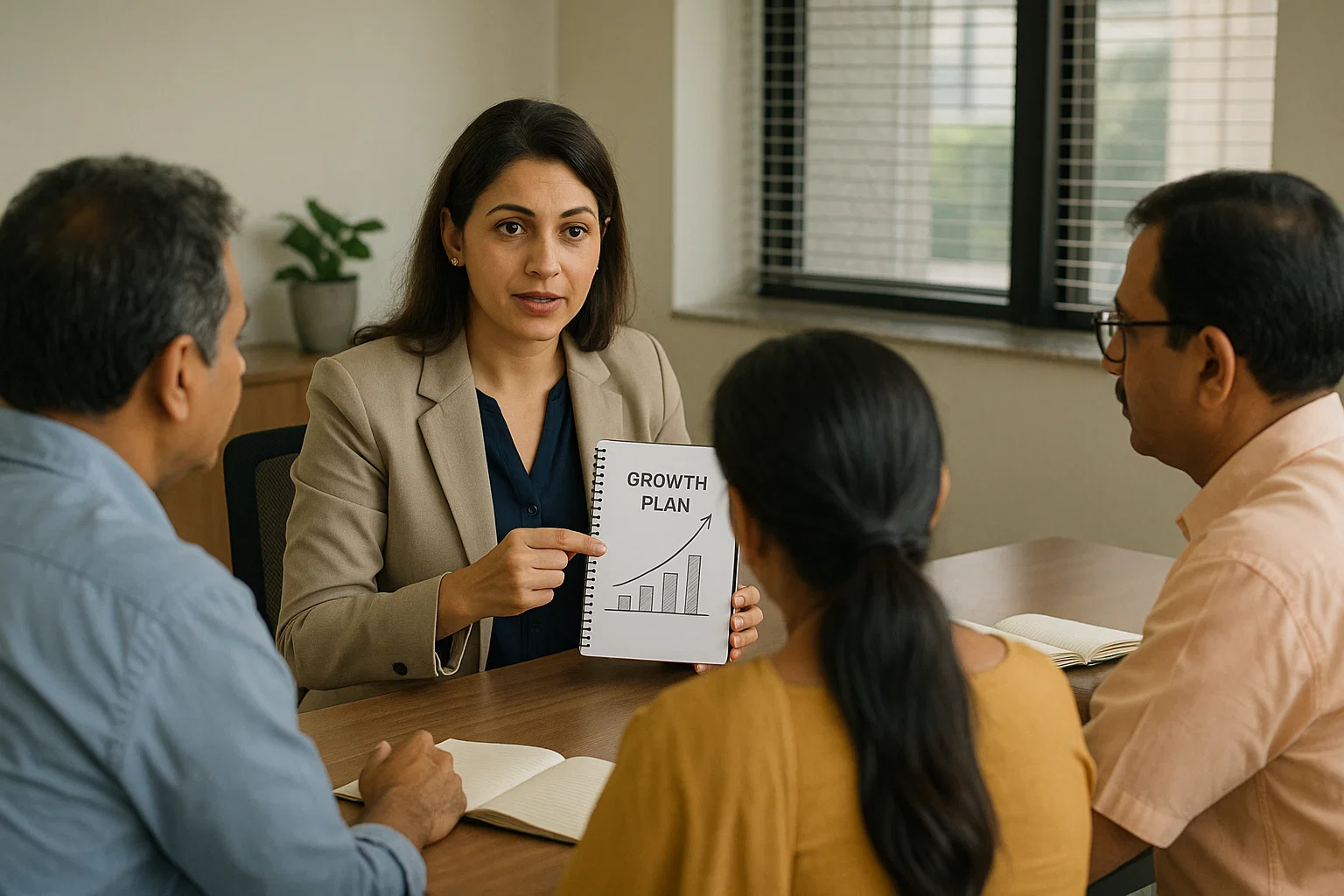
A business coach in India typically works with entrepreneurs to bring clarity to their business direction. Instead of offering ready-made solutions, the coach helps founders think more clearly about their choices and priorities.
This support often includes:
- Defining a clear and realistic business vision
- Structuring growth strategies into actionable steps
- Prioritizing opportunities based on impact
- Building accountability systems to ensure execution
The key distinction is that a coach does not run the business. Instead, they help founders develop the clarity and discipline required to run it effectively.
For many women entrepreneurs, this structured approach provides a stable foundation in an otherwise unpredictable journey.
Building Confidence Through Clarity and Direction
Confidence Is Often a Byproduct of Structure
Confidence is often misunderstood as something that needs to be built directly. In reality, it tends to develop naturally when clarity and consistency improve.
When founders have a clear understanding of their goals and a structured plan to achieve them, decision-making becomes easier. Doubt reduces, and actions become more deliberate.
Research indicates that individuals working with structured coaching frameworks often report significant improvements in confidence and performance. This is not because they are being motivated constantly, but because they are operating with better clarity.
A business coach in India plays an important role in this process by helping founders:
- Break down complex decisions into manageable steps
- Evaluate options more objectively
- Stay consistent in execution
Over time, small wins build momentum. And with momentum comes confidence—not as an external push, but as a natural outcome of better decisions and steady progress.
From Ideas to Systems: Making Businesses Scalable
Moving Beyond Passion to Process
Many women-led businesses begin with a strong sense of purpose or passion. This is often what drives the initial momentum.
However, as the business grows, passion alone is not enough to sustain progress. Without systems, even the most promising ventures can struggle to scale.
Scaling requires structure:
- Clearly defined processes
- Delegation of responsibilities
- Consistent workflows
- Measurable performance indicators
This transition—from idea-driven operations to system-driven growth—is where many founders face difficulty.
Coaching helps bridge this gap.
Working with a business coach in India allows entrepreneurs to convert their ideas into repeatable systems. Instead of relying entirely on personal effort, businesses begin to function through processes that can be scaled and replicated.
Studies suggest that businesses with structured guidance are significantly more likely to achieve growth milestones compared to those operating without clear systems.
This shift reduces dependency on the founder and creates a more stable, scalable business model.
Leadership Evolution: From Founder to Business Leader
Growing the Business Means Growing the Leader
As a business grows, the role of the founder must evolve.
In the early stages, founders are deeply involved in every aspect of the business. They make decisions quickly, solve problems directly, and manage operations closely.
However, this approach becomes unsustainable as the team expands.
Leadership then shifts from doing everything to enabling others to perform effectively.
This transition requires:
- Strong communication skills
- Trust in team members
- Ability to delegate responsibilities
- Clarity in setting expectations
Many founders find this shift challenging, not because they lack capability, but because they have never had to lead at this level before.
A business coach especially in India helps navigate this transition by providing structured guidance on leadership development. Founders learn how to step back strategically, focus on high-impact decisions, and build teams that can operate independently.
This not only improves business performance but also reduces burnout—an increasingly common issue among entrepreneurs.
Real Impact: How Coaching Translates into Business Outcomes
Beyond Motivation — Tangible Growth
The true value of coaching becomes visible not in conversations, but in outcomes.
When founders begin applying structured thinking to their business, several improvements start to emerge.
These include:
- More consistent revenue growth
- Better alignment within teams
- Faster execution of ideas
- Clearer positioning in the market
Data suggests that a large percentage of women-led businesses experience measurable performance improvements when supported by structured coaching frameworks.
The reason is straightforward.
Better clarity leads to better decisions.
Better decisions lead to better outcomes.
Over time, this creates a compounding effect where the business becomes more stable, predictable, and scalable.
Why This Shift Matters in Evolving Entrepreneurial Ecosystems
A New Era of Inclusive Growth
The rise of women entrepreneurs is not just a trend—it is a significant shift in how modern economies are evolving.
Women-led businesses now contribute meaningfully to economic growth, with estimates suggesting a growing share in overall GDP contribution. Government initiatives, funding programs, and digital platforms are further supporting this expansion.
However, growth at scale requires more than opportunity. It requires structure.
This is where coaching becomes an important part of the ecosystem. By helping founders build clarity, systems, and leadership capabilities, structured guidance unlocks potential that might otherwise remain underutilized.
The focus, therefore, is not just on increasing participation, but on enabling sustainable success.
What Women Entrepreneurs Should Look for in the Right Coach
Choosing Guidance That Aligns with Growth
Not every coaching experience delivers the same value. The impact largely depends on choosing the right fit.
Women entrepreneurs looking for structured guidance should consider several factors.
A strong understanding of business realities is essential. The coach should be able to relate to real challenges rather than offering generic advice.
Strategic thinking is equally important. Coaching should provide frameworks that help founders make better decisions consistently.
Experience with scaling businesses adds another layer of value. Growth-stage challenges are very different from early-stage struggles, and guidance should reflect that.
Finally, the ability to provide honest feedback matters. Growth often requires difficult conversations, and a coach should be able to challenge assumptions constructively.
The right business coach in India offers perspective, structure, and accountability—without creating dependency.
Conclusion
The rise of women entrepreneurs marks an important shift in the business landscape. More women are building companies, leading teams, and contributing to economic growth than ever before.
At the same time, the challenges of entrepreneurship remain real. Scaling a business requires clarity, structure, and consistent decision-making.
This is where coaching becomes relevant.
By providing an external perspective and structured guidance, coaching helps founders move from ambition to execution. It bridges the gap between effort and measurable results.
For many women entrepreneurs today, working with a business coach especially in India is becoming a practical step toward building businesses that are not just successful, but sustainable.
As you build your business, it may be worth asking a simple question:
Are you moving forward with clarity, or just momentum?
If you’re exploring ways to bring more structure and direction into your journey, an external perspective can make a meaningful difference.